进程间通信(IPC)源码分析
本调研报告主要分析6.6内核版本的IPC源码部分。
**进程间通信(IPC,InterProcess Communication)**是指在不同进程之间传播或交换信息。IPC的方式通常有管道(包括无名管道和命名管道)、消息队列、信号量、共享存储、Socket、Streams等。其中 Socket和Streams支持不同主机上的两个进程IPC。
- 管道pipe:管道是一种半双工的通信方式,数据只能单向流动,而且只能在具有亲缘关系的进程间使用。进程的亲缘关系通常是指父子进程关系。
- 消息队列MessageQueue:消息队列是由消息的链表,存放在内核中并由消息队列标识符标识。消息队列克服了信号传递信息少、管道只能承载无格式字节流以及缓冲区大小受限等缺点。
- 共享内存SharedMemory:共享内存就是映射一段能被其他进程所访问的内存,这段共享内存由一个进程创建,但多个进程都可以访问。共享内存是最快的 IPC 方式,它是针对其他进程间通信方式运行效率低而专门设计的。它往往与其他通信机制,如信号量,配合使用,来实现进程间的同步和通信。
- 信号 ( signal ) : 信号是一种比较复杂的通信方式,用于通知接收进程某个事件已经发生。
- 信号量Semaphore:信号量是一个计数器,可以用来控制多个进程对共享资源的访问。它常作为一种锁机制,防止某进程正在访问共享资源时,其他进程也访问该资源。因此,主要作为进程间以及同一进程内不同线程之间的同步手段。
- 套接字Socket:套接字也是一种进程间通信机制,与其他通信机制不同的是,它可用于不同及其间的进程通信
IPC(Inter-Process Communication,进程间通信)相关的代码主要位于内核源码树的ipc目录下(主要是信号量、共享内存以及消息队列),管道和命名管道的实现主要在fs/pipe.c文件中,套接字主要分布在net目录下。
IPC目录源码分析:
compat.c:
- 这个文件包含了兼容性代码,确保IPC机制在不同版本的Linux内核或不同硬件架构上正常工作。
ipc_sysctl.c:
- 这个文件管理IPC的系统控制(sysctl)接口。Sysctl允许在运行时读取和修改内核参数,这个文件处理与IPC相关的参数。
mq_sysctl.c:
- 类似于
ipc_sysctl.c,但专门用于消息队列(MQ)。它管理消息队列IPC机制的sysctl接口参数。
mqueue.c:
- 这个文件实现了消息队列功能。消息队列用于在进程之间发送和接收消息,提供一种IPC方法。
msg.c:
- 这个文件可能处理System V消息队列的实现,这是类Unix操作系统中另一种消息传递IPC机制。
msgutil.c:
- 包含消息队列的实用函数。这些函数可能协助完成消息队列的常见操作,例如创建、删除和管理消息缓冲区。
namespace.c:
-
IPC命名空间,管理IPC命名空间的创建、销毁及相关操作。
-
核心函数:
1、inc_ipc_namespaces 和 dec_ipc_namespaces
这两个函数用于增加和减少IPC命名空间的引用计数,确保正确管理命名空间的生命周期。
2、create_ipc_ns创建一个新的IPC命名空间,包括初始化相关的数据结构和资源
3、copy_ipcs
这个函数在创建新进程时复制IPC命名空间。如果CLONE_NEWIPC标志被设置,则创建新的命名空间,否则返回现有的命名空间。
4、free_ipcs
这个函数释放某个命名空间中的所有IPC资源。
5、free_ipc_ns
这个函数释放IPC命名空间,包括相关资源的清理工作。
6、put_ipc_ns
这个函数用于减少IPC命名空间的引用计数,并在引用计数为0时释放命名空间。
7、ipcns_get, ipcns_put, ipcns_install, ipcns_owner
这些函数是针对IPC命名空间的操作接口,提供了获取、释放、安装和获取所有者等功能。
sem.c:
- 这个文件实现了信号量功能,一种用于控制多个进程对共享资源访问的同步机制。
shm.c:
- 这个文件处理共享内存段,允许多个进程访问相同的内存空间进行IPC。共享内存是最快的IPC机制之一。
syscall.c:
-
实现了一个旧的SysV IPC系统调用多路复用器 sys_ipc,并提供了一个新的系统调用 ksys_ipc 来处理各种IPC操作。这些操作包括信号量、消息队列和共享内存的创建、控制和操作。代码还包含了兼容性处理,以支持32位和64位系统之间的交互。
-
核心函数:
1、 ksys_ipc 函数
ksys_ipc 是实际处理IPC请求的核心函数。它根据传入的 call 参数确定具体的IPC操作,并调用相应的内核函数来处理具体的IPC操作。
2、compat_ksys_ipc函数
与上面那个函数一样,不过是做了一些兼容性处理。
3、这个宏定义了一个新的系统调用 ipc,它接收6个参数,并将这些参数传递给 ksys_ipc 函数进行处理。
1
2
3
4
5
|
SYSCALL_DEFINE6(ipc, unsigned int, call, int, first, unsigned long, second,
        unsigned long, third, void __user *, ptr, long, fifth)
{
    return ksys_ipc(call, first, second, third, ptr, fifth);
}
|
util.c:
-
包含在不同IPC机制中共享的实用函数。这些函数可能包括内存分配、错误处理或其他通用任务的辅助函数。用于初始化和管理 Linux 系统的 System V IPC(进程间通信)机制的一个模块。System V IPC 包括信号量(sem)、消息队列(msg)和共享内存(shm)。代码涉及 IPC 对象的创建、查找、权限检查、以及 ID 管理等操作。
-
核心函数:
1、结构体定义
1
2
3
4
5
6
|
struct ipc_proc_iface {
	const char *path;
	const char *header;
	int ids;
	int (*show)(struct seq_file *, void *);
};
|
ipc_proc_iface 结构体定义了在 /proc 文件系统中显示 IPC 信息的接口。
2、初始化函数
1
2
3
4
5
6
7
8
|
static int __init ipc_init(void) {
	proc_mkdir("sysvipc", NULL);
	sem_init();
	msg_init();
	shm_init();
	return 0;
}
device_initcall(ipc_init);
|
ipc_init 函数用于初始化 IPC 子系统,创建 /proc/sysvipc 目录,并调用信号量、消息队列和共享内存的初始化函数。
3、哈希表参数
1
2
3
4
5
6
|
static const struct rhashtable_params ipc_kht_params = {
	.head_offset = offsetof(struct kern_ipc_perm, khtnode),
	.key_offset = offsetof(struct kern_ipc_perm, key),
	.key_len = sizeof_field(struct kern_ipc_perm, key),
	.automatic_shrinking = true,
};
|
ipc_kht_params 定义了 IPC 对象哈希表的参数,包括头部偏移、键偏移和键长度。
4、IPC ID 初始化
 1
 2
 3
 4
 5
 6
 7
 8
 9
10
11
12
|
void ipc_init_ids(struct ipc_ids *ids) {
	ids->in_use = 0;
	ids->seq = 0;
	init_rwsem(&ids->rwsem);
	rhashtable_init(&ids->key_ht, &ipc_kht_params);
	idr_init(&ids->ipcs_idr);
	ids->max_idx = -1;
	ids->last_idx = -1;
#ifdef CONFIG_CHECKPOINT_RESTORE
	ids->next_id = -1;
#endif
}
|
ipc_init_ids 函数初始化 IPC 标识符集,设置初始值并初始化哈希表和 ID 管理器。
5、进程接口初始化
 1
 2
 3
 4
 5
 6
 7
 8
 9
10
11
12
13
14
15
16
17
18
19
|
#ifdef CONFIG_PROC_FS
static const struct proc_ops sysvipc_proc_ops;
void __init ipc_init_proc_interface(const char *path, const char *header, int ids, int (*show)(struct seq_file *, void *)) {
	struct proc_dir_entry *pde;
	struct ipc_proc_iface *iface;

	iface = kmalloc(sizeof(*iface), GFP_KERNEL);
	if (!iface)
		return;
	iface->path = path;
	iface->header = header;
	iface->ids = ids;
	iface->show = show;

	pde = proc_create_data(path, S_IRUGO, NULL, &sysvipc_proc_ops, iface);
	if (!pde)
		kfree(iface);
}
#endif
|
ipc_init_proc_interface 函数创建 /proc 文件系统中的 IPC 信息接口。
6、查找 IPC 键
 1
 2
 3
 4
 5
 6
 7
 8
 9
10
11
|
static struct kern_ipc_perm *ipc_findkey(struct ipc_ids *ids, key_t key) {
	struct kern_ipc_perm *ipcp;

	ipcp = rhashtable_lookup_fast(&ids->key_ht, &key, ipc_kht_params);
	if (!ipcp)
		return NULL;

	rcu_read_lock();
	ipc_lock_object(ipcp);
	return ipcp;
}
|
ipc_findkey 函数在哈希表中查找给定键的 IPC 对象,并返回该对象。
7、ID 分配
 1
 2
 3
 4
 5
 6
 7
 8
 9
10
11
12
13
14
15
16
17
18
19
20
21
22
23
24
25
26
27
28
29
30
31
32
33
34
35
|
static inline int ipc_idr_alloc(struct ipc_ids *ids, struct kern_ipc_perm *new) {
	int idx, next_id = -1;

#ifdef CONFIG_CHECKPOINT_RESTORE
	next_id = ids->next_id;
	ids->next_id = -1;
#endif

	if (next_id < 0) {
		int max_idx;

		max_idx = max(ids->in_use*3/2, ipc_min_cycle);
		max_idx = min(max_idx, ipc_mni);

		idx = idr_alloc_cyclic(&ids->ipcs_idr, NULL, 0, max_idx, GFP_NOWAIT);

		if (idx >= 0) {
			if (idx <= ids->last_idx) {
				ids->seq++;
				if (ids->seq >= ipcid_seq_max())
					ids->seq = 0;
			}
			ids->last_idx = idx;

			new->seq = ids->seq;
			idr_replace(&ids->ipcs_idr, new, idx);
		}
	} else {
		new->seq = ipcid_to_seqx(next_id);
		idx = idr_alloc(&ids->ipcs_idr, new, ipcid_to_idx(next_id), 0, GFP_NOWAIT);
	}
	if (idx >= 0)
		new->id = (new->seq << ipcmni_seq_shift()) + idx;
	return idx;
}
|
ipc_idr_alloc 函数将一个新的IPC对象添加到IDR中,并且分配新的 IPC ID和设置 IPC 对象的序列号。
8、添加一个IPC对象
 1
 2
 3
 4
 5
 6
 7
 8
 9
10
11
12
13
14
15
16
17
18
19
20
21
22
23
24
25
26
27
28
29
30
31
32
33
34
35
36
37
38
39
40
41
42
43
44
45
46
47
|
int ipc_addid(struct ipc_ids *ids, struct kern_ipc_perm *new, int limit) {
	kuid_t euid;
	kgid_t egid;
	int idx, err;

	refcount_set(&new->refcount, 1);

	if (limit > ipc_mni)
		limit = ipc_mni;

	if (ids->in_use >= limit)
		return -ENOSPC;

	idr_preload(GFP_KERNEL);

	spin_lock_init(&new->lock);
	rcu_read_lock();
	spin_lock(&new->lock);

	current_euid_egid(&euid, &egid);
	new->cuid = new->uid = euid;
	new->gid = new->cgid = egid;

	new->deleted = false;

	idx = ipc_idr_alloc(ids, new);
	idr_preload_end();

	if (idx >= 0 && new->key != IPC_PRIVATE) {
		err = rhashtable_insert_fast(&ids->key_ht, &new->khtnode, ipc_kht_params);
		if (err < 0) {
			idr_remove(&ids->ipcs_idr, idx);
			idx = err;
		}
	}
	if (idx < 0) {
		new->deleted = true;
		spin_unlock(&new->lock);
		rcu_read_unlock();
		return idx;
	}

	ids->in_use++;
	if (idx > ids->max_idx)
		ids->max_idx = idx;
	return idx;
}
|
ipc_addid 函数将新的 IPC 对象添加到 IDR,并在哈希表中插入该对象。
8、新建 IPC 对象
1
2
3
4
5
6
7
8
|
static int ipcget_new(struct ipc_namespace *ns, struct ipc_ids *ids, const struct ipc_ops *ops, struct ipc_params *params) {
	int err;

	down_write(&ids->rwsem);
	err = ops->getnew(ns, params);
	up_write(&ids->rwsem);
	return err;
}
|
ipcget_new 函数创建一个新的 IPC 对象。
9、检查 IPC 权限
 1
 2
 3
 4
 5
 6
 7
 8
 9
10
11
12
13
|
static int ipc_check_perms(struct ipc_namespace *ns, struct kern_ipc_perm *ipcp, const struct ipc_ops *ops, struct ipc_params *params) {
	int err;

	if (ipcperms(ns, ipcp, params->flg))
		err = -EACCES;
	else {
		err = ops->associate(ipcp, params->flg);
		if (!err)
			err = ipcp->id;
	}

	return err;
}
|
ipc_check_perms 函数检查 IPC 对象的权限。
10、获取公共 IPC 对象
 1
 2
 3
 4
 5
 6
 7
 8
 9
10
11
12
13
14
15
16
17
18
19
20
21
22
23
24
|
static int ipcget_public(struct ipc_namespace *ns, struct ipc_ids *ids, const struct ipc_ops *ops, struct ipc_params *params) {
	struct kern_ipc_perm *ipcp;
	int flg = params->flg;
	int err;

	down_write(&ids->rwsem);
	ipcp = ipc_findkey(ids, params->key);
	if (ipcp == NULL) {
		if (!(flg & IPC_CREAT))
			err = -ENOENT;
		else
			err = ops->getnew(ns, params);
	} else {
		if (flg & IPC_CREAT && flg & IPC_EXCL)
			err = -EEXIST;
		else
			err = ipc_check_perms(ns, ipcp, ops, params);

		ipc_unlock_object(ipcp);
	}
	up_write(&ids->rwsem);

	return err;
}
|
ipcget 函数是 IPC 对象的入口函数,根据键值决定是获取现有对象还是创建新对象。
11、从哈希表中移除ipc
1
2
3
4
5
6
|
static void ipc_kht_remove(struct ipc_ids *ids, struct kern_ipc_perm *ipcp)
{
	if (ipcp->key != IPC_PRIVATE)
		WARN_ON_ONCE(rhashtable_remove_fast(&ids->key_ht, &ipcp->khtnode,
				       ipc_kht_params));
}
|
ipc_kht_remove函数用于从哈希表移除ipc
12、删除ipc
 1
 2
 3
 4
 5
 6
 7
 8
 9
10
11
12
13
14
15
16
|
void ipc_rmid(struct ipc_ids *ids, struct kern_ipc_perm *ipcp)
{
	int idx = ipcid_to_idx(ipcp->id);

	WARN_ON_ONCE(idr_remove(&ids->ipcs_idr, idx) != ipcp);
	ipc_kht_remove(ids, ipcp);
	ids->in_use--;
	ipcp->deleted = true;

	if (unlikely(idx == ids->max_idx)) {
		idx = ids->max_idx-1;
		if (idx >= 0)
			idx = ipc_search_maxidx(ids, idx);
		ids->max_idx = idx;
	}
}
|
ipc_rmid函数用于移除ipc
其余函数未全部列出
util.h:
- 与
util.c相关的头文件。它声明了util.c中定义的函数和变量,使它们对IPC子系统的其他部分可访问
Linux 内核提供了多种 IPC 机制,其中System V IPC 包括:System V 信号量、System V消息队列、System V 共享内存。这三种通信机制有很多相似之处。
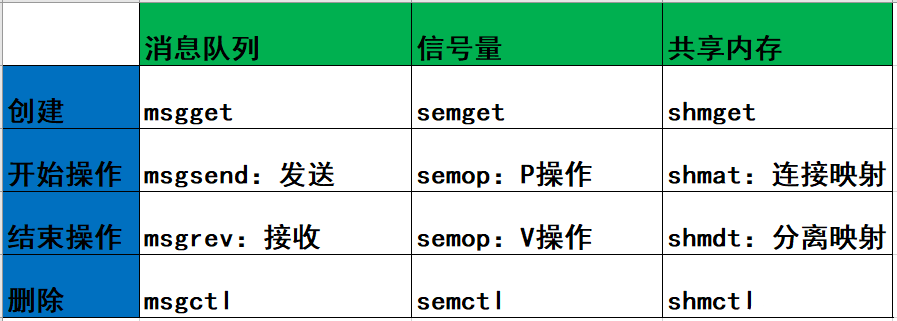
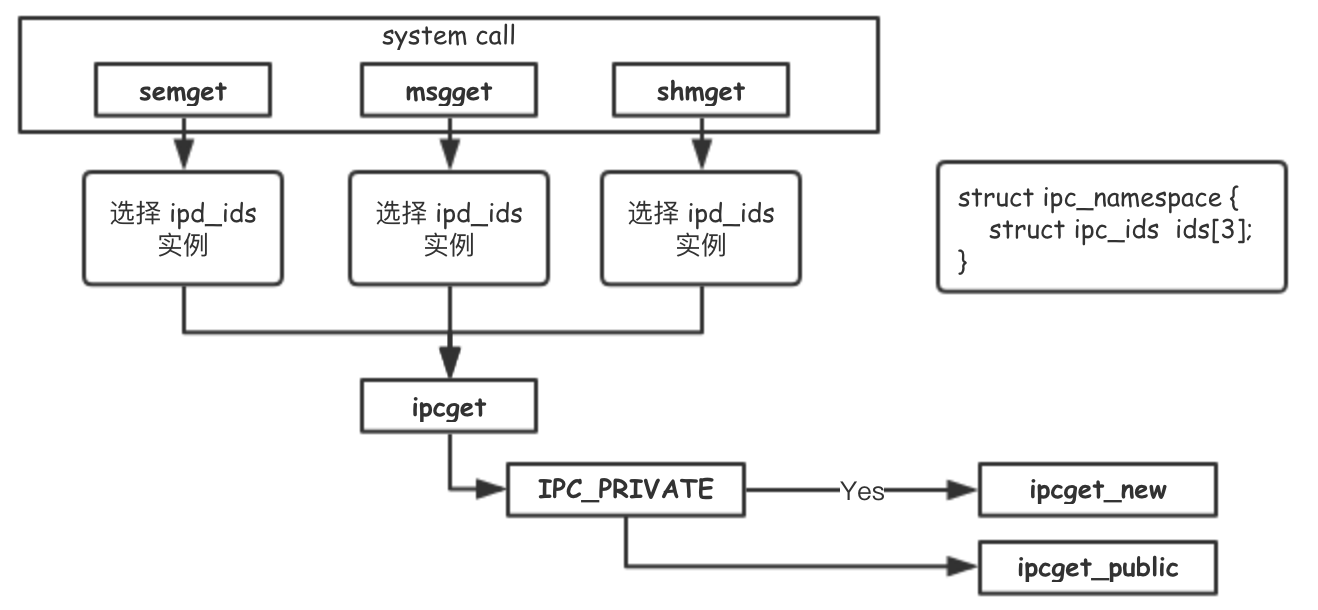
创建流程如下:
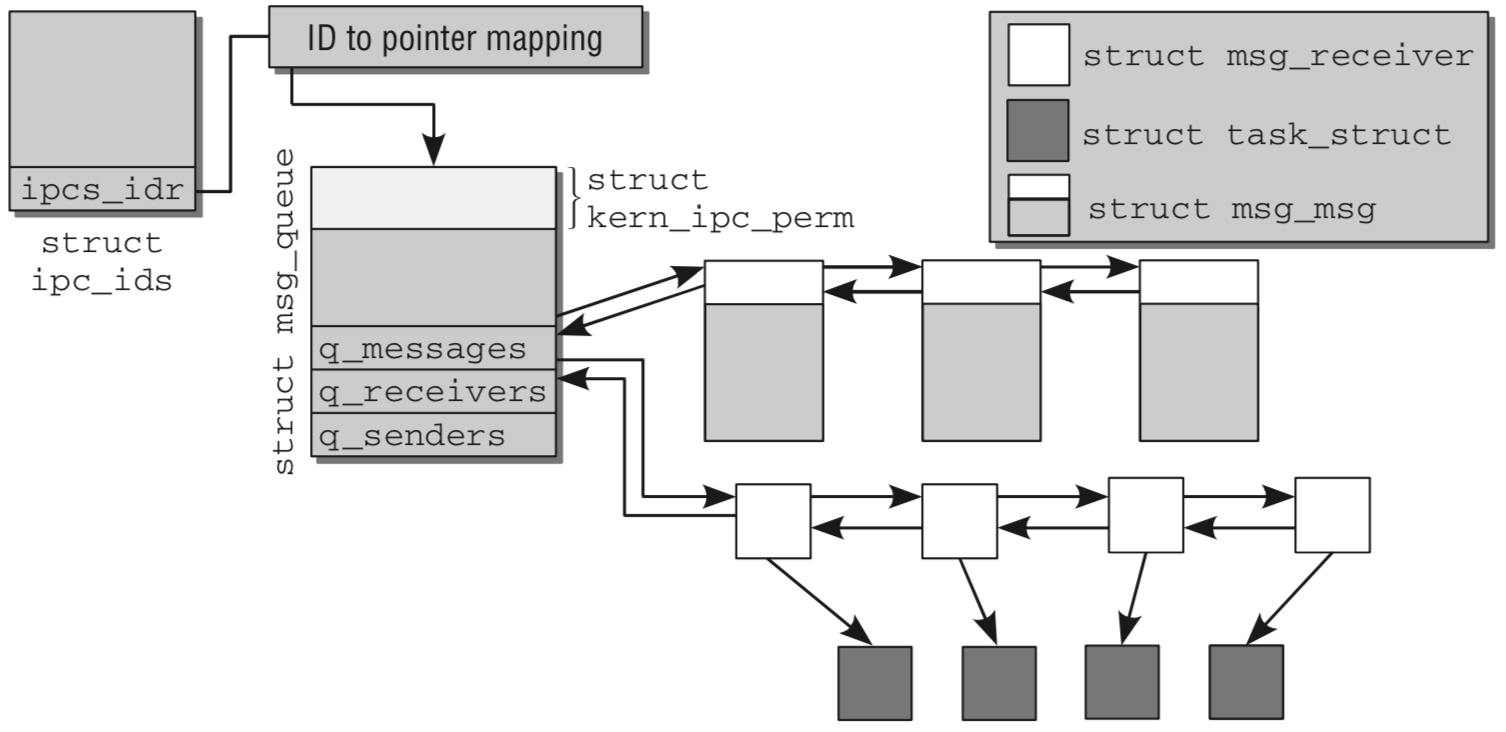
消息队列
消息队列,是消息的链接表,存放在内核中。一个消息队列由一个标识符(即队列ID)来标识。
消息队列(Message Queue,简称MQ)是由内核管理的消息链接表,由消息队列标识符标识,标识符简称队列ID。消息队列提供了进程之间单向传送数据的方法,每个消息包含有一个正的长整型类型的数据段、一个非负的长度以及实际数据字节数(对应于长度),消息队列总字节数是有上限的,系统上消息队列总数也有上限。
MQ传递的是消息,也就是进程间需要传递的数据,系统内核中有很多MQ,这些MQ采用链表实现并由系统内核维护,每个MQ用消息队列描述符(qid)来区分,每个MQ 的pid具有唯一性。
原型
1
2
3
4
5
6
7
8
9
|
#include <sys/msg.h>
// 创建或打开消息队列:成功返回队列ID,失败返回-1
int msgget(key_t key, int flag);
// 添加消息:成功返回0,失败返回-1
int msgsnd(int msqid, const void *ptr, size_t size, int flag);
// 读取消息:成功返回消息数据的长度,失败返回-1
int msgrcv(int msqid, void *ptr, size_t size, long type,int flag);
// 控制消息队列:成功返回0,失败返回-1
int msgctl(int msqid, int cmd, struct msqid_ds *buf);
|
在以下两种情况下,msgget将创建一个新的消息队列:
- 如果没有与键值key相对应的消息队列,并且flag中包含了
IPC_CREAT标志位。
- key参数为
IPC_PRIVATE。
函数msgrcv在读取消息队列时,type参数有下面几种情况:
type == 0,返回队列中的第一个消息;type > 0,返回队列中消息类型为 type 的第一个消息;type < 0,返回队列中消息类型值小于或等于 type 绝对值的消息,如果有多个,则取类型值最小的消息。
主要结构体
 1
 2
 3
 4
 5
 6
 7
 8
 9
10
11
12
13
14
15
16
17
18
19
20
21
22
23
24
25
26
27
28
29
30
31
32
33
34
35
|
/* one msq_queue structure for each present queue on the system */
struct msg_queue {
	struct kern_ipc_perm q_perm;
	time64_t q_stime;		/* last msgsnd time */
	time64_t q_rtime;		/* last msgrcv time */
	time64_t q_ctime;		/* last change time */
	unsigned long q_cbytes;		/* current number of bytes on queue */
	unsigned long q_qnum;		/* number of messages in queue */
	unsigned long q_qbytes;		/* max number of bytes on queue */
	struct pid *q_lspid;		/* pid of last msgsnd */
	struct pid *q_lrpid;		/* last receive pid */

	struct list_head q_messages;
	struct list_head q_receivers;
	struct list_head q_senders;
} __randomize_layout;

/* one msg_receiver structure for each sleeping receiver */
struct msg_receiver {
	struct list_head	r_list;
	struct task_struct	*r_tsk;

	int			r_mode;
	long			r_msgtype;
	long			r_maxsize;

	struct msg_msg		*r_msg;
};

/* one msg_sender for each sleeping sender */
struct msg_sender {
	struct list_head	list;
	struct task_struct	*tsk;
	size_t                  msgsz;
};
|
核心函数
msgget函数实现负责创建或打开消息队列
 1
 2
 3
 4
 5
 6
 7
 8
 9
10
11
12
13
14
15
16
|
long ksys_msgget(key_t key, int msgflg)
{
	struct ipc_namespace *ns;
	static const struct ipc_ops msg_ops = {
		.getnew = newque,
		.associate = security_msg_queue_associate,
	};
	struct ipc_params msg_params;

	ns = current->nsproxy->ipc_ns;

	msg_params.key = key;
	msg_params.flg = msgflg;

	return ipcget(ns, &msg_ids(ns), &msg_ops, &msg_params);
}
|
msgsnd函数实际由do_msgsnd函数实现,负责对消息的发送。
  1
  2
  3
  4
  5
  6
  7
  8
  9
 10
 11
 12
 13
 14
 15
 16
 17
 18
 19
 20
 21
 22
 23
 24
 25
 26
 27
 28
 29
 30
 31
 32
 33
 34
 35
 36
 37
 38
 39
 40
 41
 42
 43
 44
 45
 46
 47
 48
 49
 50
 51
 52
 53
 54
 55
 56
 57
 58
 59
 60
 61
 62
 63
 64
 65
 66
 67
 68
 69
 70
 71
 72
 73
 74
 75
 76
 77
 78
 79
 80
 81
 82
 83
 84
 85
 86
 87
 88
 89
 90
 91
 92
 93
 94
 95
 96
 97
 98
 99
100
101
102
103
104
105
106
107
108
109
110
111
112
|
static long do_msgsnd(int msqid, long mtype, void __user *mtext,
		size_t msgsz, int msgflg)
{
	struct msg_queue *msq;
	struct msg_msg *msg;
	int err;
	struct ipc_namespace *ns;
	DEFINE_WAKE_Q(wake_q);

	ns = current->nsproxy->ipc_ns;

	if (msgsz > ns->msg_ctlmax || (long) msgsz < 0 || msqid < 0)
		return -EINVAL;
	if (mtype < 1)
		return -EINVAL;

	msg = load_msg(mtext, msgsz);
	if (IS_ERR(msg))
		return PTR_ERR(msg);

	msg->m_type = mtype;
	msg->m_ts = msgsz;

	rcu_read_lock();
	msq = msq_obtain_object_check(ns, msqid);
	if (IS_ERR(msq)) {
		err = PTR_ERR(msq);
		goto out_unlock1;
	}

	ipc_lock_object(&msq->q_perm);

	for (;;) {
		struct msg_sender s;

		err = -EACCES;
		if (ipcperms(ns, &msq->q_perm, S_IWUGO))
			goto out_unlock0;

		/* raced with RMID? */
		if (!ipc_valid_object(&msq->q_perm)) {
			err = -EIDRM;
			goto out_unlock0;
		}

		err = security_msg_queue_msgsnd(&msq->q_perm, msg, msgflg);
		if (err)
			goto out_unlock0;

		if (msg_fits_inqueue(msq, msgsz))
			break;

		/* queue full, wait: */
		if (msgflg & IPC_NOWAIT) {
			err = -EAGAIN;
			goto out_unlock0;
		}

		/* enqueue the sender and prepare to block */
		ss_add(msq, &s, msgsz);

		if (!ipc_rcu_getref(&msq->q_perm)) {
			err = -EIDRM;
			goto out_unlock0;
		}

		ipc_unlock_object(&msq->q_perm);
		rcu_read_unlock();
		schedule();

		rcu_read_lock();
		ipc_lock_object(&msq->q_perm);

		ipc_rcu_putref(&msq->q_perm, msg_rcu_free);
		/* raced with RMID? */
		if (!ipc_valid_object(&msq->q_perm)) {
			err = -EIDRM;
			goto out_unlock0;
		}
		ss_del(&s);

		if (signal_pending(current)) {
			err = -ERESTARTNOHAND;
			goto out_unlock0;
		}

	}

	ipc_update_pid(&msq->q_lspid, task_tgid(current));
	msq->q_stime = ktime_get_real_seconds();

	if (!pipelined_send(msq, msg, &wake_q)) {
		/* no one is waiting for this message, enqueue it */
		list_add_tail(&msg->m_list, &msq->q_messages);
		msq->q_cbytes += msgsz;
		msq->q_qnum++;
		percpu_counter_add_local(&ns->percpu_msg_bytes, msgsz);
		percpu_counter_add_local(&ns->percpu_msg_hdrs, 1);
	}

	err = 0;
	msg = NULL;

out_unlock0:
	ipc_unlock_object(&msq->q_perm);
	wake_up_q(&wake_q);
out_unlock1:
	rcu_read_unlock();
	if (msg != NULL)
		free_msg(msg);
	return err;
}
|
msgrcv函数实际由do_msgrcv函数实现,实现对消息的接收。
  1
  2
  3
  4
  5
  6
  7
  8
  9
 10
 11
 12
 13
 14
 15
 16
 17
 18
 19
 20
 21
 22
 23
 24
 25
 26
 27
 28
 29
 30
 31
 32
 33
 34
 35
 36
 37
 38
 39
 40
 41
 42
 43
 44
 45
 46
 47
 48
 49
 50
 51
 52
 53
 54
 55
 56
 57
 58
 59
 60
 61
 62
 63
 64
 65
 66
 67
 68
 69
 70
 71
 72
 73
 74
 75
 76
 77
 78
 79
 80
 81
 82
 83
 84
 85
 86
 87
 88
 89
 90
 91
 92
 93
 94
 95
 96
 97
 98
 99
100
101
102
103
104
105
106
107
108
109
110
111
112
113
114
115
116
117
118
119
120
121
122
123
124
125
126
127
128
129
130
131
132
133
134
135
136
137
138
139
140
141
142
143
144
145
146
147
148
149
150
151
152
153
154
155
156
157
158
159
160
161
162
163
164
165
166
167
168
169
170
171
|
static long do_msgrcv(int msqid, void __user *buf, size_t bufsz, long msgtyp, int msgflg,
	       long (*msg_handler)(void __user *, struct msg_msg *, size_t))
{
	int mode;
	struct msg_queue *msq;
	struct ipc_namespace *ns;
	struct msg_msg *msg, *copy = NULL;
	DEFINE_WAKE_Q(wake_q);

	ns = current->nsproxy->ipc_ns;

	if (msqid < 0 || (long) bufsz < 0)
		return -EINVAL;

	if (msgflg & MSG_COPY) {
		if ((msgflg & MSG_EXCEPT) || !(msgflg & IPC_NOWAIT))
			return -EINVAL;
		copy = prepare_copy(buf, min_t(size_t, bufsz, ns->msg_ctlmax));
		if (IS_ERR(copy))
			return PTR_ERR(copy);
	}
	mode = convert_mode(&msgtyp, msgflg);

	rcu_read_lock();
	msq = msq_obtain_object_check(ns, msqid);
	if (IS_ERR(msq)) {
		rcu_read_unlock();
		free_copy(copy);
		return PTR_ERR(msq);
	}

	for (;;) {
		struct msg_receiver msr_d;

		msg = ERR_PTR(-EACCES);
		if (ipcperms(ns, &msq->q_perm, S_IRUGO))
			goto out_unlock1;

		ipc_lock_object(&msq->q_perm);

		/* raced with RMID? */
		if (!ipc_valid_object(&msq->q_perm)) {
			msg = ERR_PTR(-EIDRM);
			goto out_unlock0;
		}

		msg = find_msg(msq, &msgtyp, mode);
		if (!IS_ERR(msg)) {
			/*
			 * Found a suitable message.
			 * Unlink it from the queue.
			 */
			if ((bufsz < msg->m_ts) && !(msgflg & MSG_NOERROR)) {
				msg = ERR_PTR(-E2BIG);
				goto out_unlock0;
			}
			/*
			 * If we are copying, then do not unlink message and do
			 * not update queue parameters.
			 */
			if (msgflg & MSG_COPY) {
				msg = copy_msg(msg, copy);
				goto out_unlock0;
			}

			list_del(&msg->m_list);
			msq->q_qnum--;
			msq->q_rtime = ktime_get_real_seconds();
			ipc_update_pid(&msq->q_lrpid, task_tgid(current));
			msq->q_cbytes -= msg->m_ts;
			percpu_counter_sub_local(&ns->percpu_msg_bytes, msg->m_ts);
			percpu_counter_sub_local(&ns->percpu_msg_hdrs, 1);
			ss_wakeup(msq, &wake_q, false);

			goto out_unlock0;
		}

		/* No message waiting. Wait for a message */
		if (msgflg & IPC_NOWAIT) {
			msg = ERR_PTR(-ENOMSG);
			goto out_unlock0;
		}

		list_add_tail(&msr_d.r_list, &msq->q_receivers);
		msr_d.r_tsk = current;
		msr_d.r_msgtype = msgtyp;
		msr_d.r_mode = mode;
		if (msgflg & MSG_NOERROR)
			msr_d.r_maxsize = INT_MAX;
		else
			msr_d.r_maxsize = bufsz;

		/* memory barrier not require due to ipc_lock_object() */
		WRITE_ONCE(msr_d.r_msg, ERR_PTR(-EAGAIN));

		/* memory barrier not required, we own ipc_lock_object() */
		__set_current_state(TASK_INTERRUPTIBLE);

		ipc_unlock_object(&msq->q_perm);
		rcu_read_unlock();
		schedule();

		/*
		 * Lockless receive, part 1:
		 * We don't hold a reference to the queue and getting a
		 * reference would defeat the idea of a lockless operation,
		 * thus the code relies on rcu to guarantee the existence of
		 * msq:
		 * Prior to destruction, expunge_all(-EIRDM) changes r_msg.
		 * Thus if r_msg is -EAGAIN, then the queue not yet destroyed.
		 */
		rcu_read_lock();

		/*
		 * Lockless receive, part 2:
		 * The work in pipelined_send() and expunge_all():
		 * - Set pointer to message
		 * - Queue the receiver task for later wakeup
		 * - Wake up the process after the lock is dropped.
		 *
		 * Should the process wake up before this wakeup (due to a
		 * signal) it will either see the message and continue ...
		 */
		msg = READ_ONCE(msr_d.r_msg);
		if (msg != ERR_PTR(-EAGAIN)) {
			/* see MSG_BARRIER for purpose/pairing */
			smp_acquire__after_ctrl_dep();

			goto out_unlock1;
		}

		 /*
		  * ... or see -EAGAIN, acquire the lock to check the message
		  * again.
		  */
		ipc_lock_object(&msq->q_perm);

		msg = READ_ONCE(msr_d.r_msg);
		if (msg != ERR_PTR(-EAGAIN))
			goto out_unlock0;

		list_del(&msr_d.r_list);
		if (signal_pending(current)) {
			msg = ERR_PTR(-ERESTARTNOHAND);
			goto out_unlock0;
		}

		ipc_unlock_object(&msq->q_perm);
	}

out_unlock0:
	ipc_unlock_object(&msq->q_perm);
	wake_up_q(&wake_q);
out_unlock1:
	rcu_read_unlock();
	if (IS_ERR(msg)) {
		free_copy(copy);
		return PTR_ERR(msg);
	}

	bufsz = msg_handler(buf, msg, bufsz);
	free_msg(msg);

	return bufsz;
}

long ksys_msgrcv(int msqid, struct msgbuf __user *msgp, size_t msgsz,
		 long msgtyp, int msgflg)
{
	return do_msgrcv(msqid, msgp, msgsz, msgtyp, msgflg, do_msg_fill);
}
|
ksys_msgctl函数负责控制消息队列,根据具体cmd选择不同的操作。
 1
 2
 3
 4
 5
 6
 7
 8
 9
10
11
12
13
14
15
16
17
18
19
20
21
22
23
24
25
26
27
28
29
30
31
32
33
34
35
36
37
38
39
40
41
42
|
static long ksys_msgctl(int msqid, int cmd, struct msqid_ds __user *buf, int version)
{
	struct ipc_namespace *ns;
	struct msqid64_ds msqid64;
	int err;

	if (msqid < 0 || cmd < 0)
		return -EINVAL;

	ns = current->nsproxy->ipc_ns;

	switch (cmd) {
	case IPC_INFO:
	case MSG_INFO: {
		struct msginfo msginfo;
		err = msgctl_info(ns, msqid, cmd, &msginfo);
		if (err < 0)
			return err;
		if (copy_to_user(buf, &msginfo, sizeof(struct msginfo)))
			err = -EFAULT;
		return err;
	}
	case MSG_STAT:	/* msqid is an index rather than a msg queue id */
	case MSG_STAT_ANY:
	case IPC_STAT:
		err = msgctl_stat(ns, msqid, cmd, &msqid64);
		if (err < 0)
			return err;
		if (copy_msqid_to_user(buf, &msqid64, version))
			err = -EFAULT;
		return err;
	case IPC_SET:
		if (copy_msqid_from_user(&msqid64, buf, version))
			return -EFAULT;
		return msgctl_down(ns, msqid, cmd, &msqid64.msg_perm,
				   msqid64.msg_qbytes);
	case IPC_RMID:
		return msgctl_down(ns, msqid, cmd, NULL, 0);
	default:
		return  -EINVAL;
	}
}
|
信号量
**信号量(semaphore)**与已经介绍过的 IPC 结构不同,它是一个计数器。信号量用于实现进程间的互斥与同步,而不是用于存储进程间通信数据。
特点
- 信号量用于进程间同步,若要在进程间传递数据需要结合共享内存。
- 信号量基于操作系统的 PV 操作,程序对信号量的操作都是原子操作。
- 每次对信号量的 PV 操作不仅限于对信号量值加 1 或减 1,而且可以加减任意正整数。
- 支持信号量组。
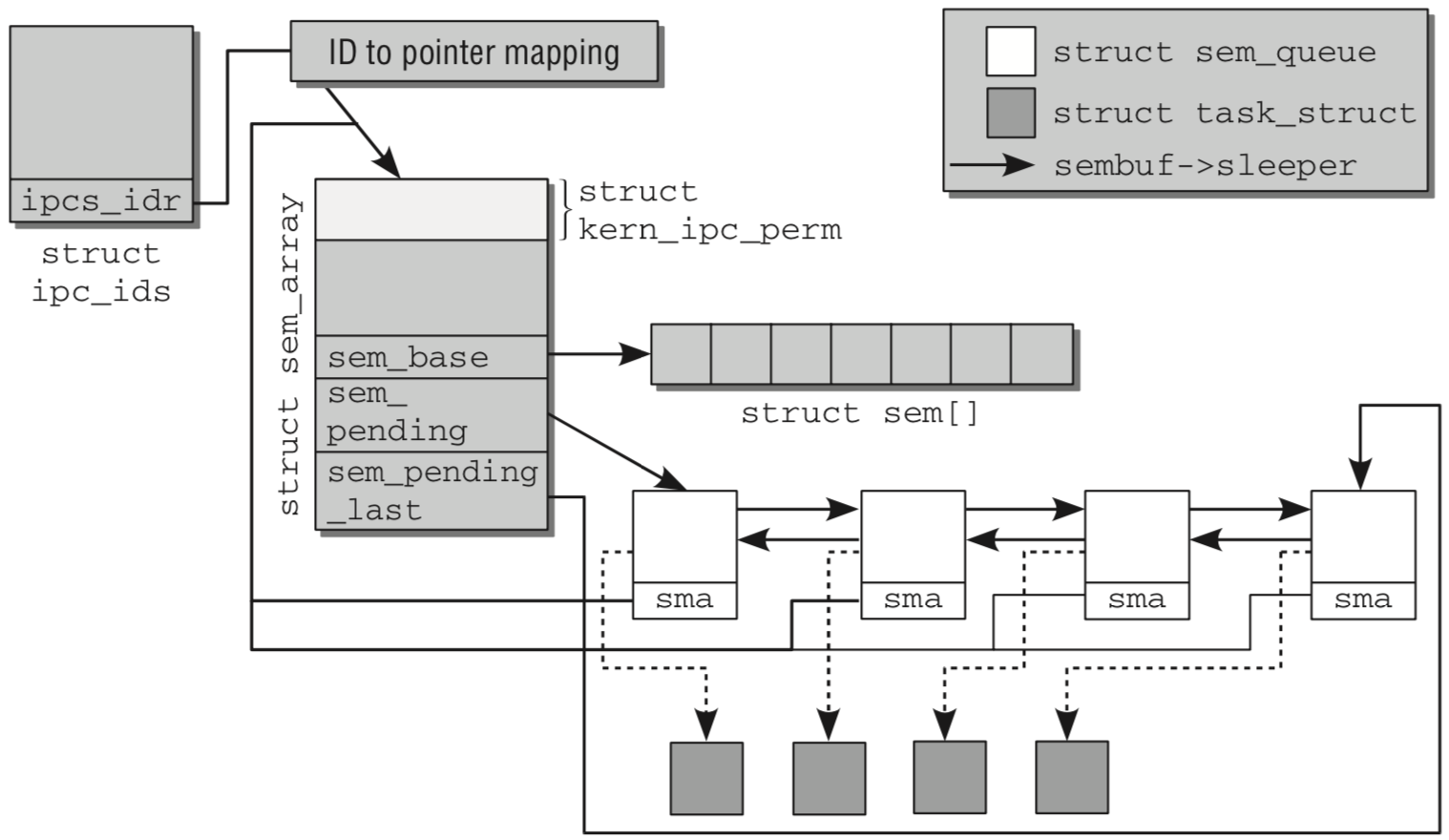
结构体
最简单的信号量是只能取 0 和 1 的变量,这也是信号量最常见的一种形式,叫做二值信号量(Binary Semaphore)。而可以取多个正整数的信号量被称为通用信号量。
 1
 2
 3
 4
 5
 6
 7
 8
 9
10
11
12
13
14
15
16
17
18
19
20
21
22
23
24
25
26
27
28
29
30
31
32
33
|
/* One semaphore structure for each semaphore in the system. */
struct sem {
	int	semval;		/* current value */
	/*
	 * PID of the process that last modified the semaphore. For
	 * Linux, specifically these are:
	 *  - semop
	 *  - semctl, via SETVAL and SETALL.
	 *  - at task exit when performing undo adjustments (see exit_sem).
	 */
	struct pid *sempid;
	spinlock_t	lock;	/* spinlock for fine-grained semtimedop */
	struct list_head pending_alter; /* pending single-sop operations */
					/* that alter the semaphore */
	struct list_head pending_const; /* pending single-sop operations */
					/* that do not alter the semaphore*/
	time64_t	 sem_otime;	/* candidate for sem_otime */
} ____cacheline_aligned_in_smp;
/* One sem_array data structure for each set of semaphores in the system. */
struct sem_array {
	struct kern_ipc_perm	sem_perm;	/* permissions .. see ipc.h */
	time64_t		sem_ctime;	/* create/last semctl() time */
	struct list_head	pending_alter;	/* pending operations */
						/* that alter the array */
	struct list_head	pending_const;	/* pending complex operations */
						/* that do not alter semvals */
	struct list_head	list_id;	/* undo requests on this array */
	int			sem_nsems;	/* no. of semaphores in array */
	int			complex_count;	/* pending complex operations */
	unsigned int		use_global_lock;/* >0: global lock required */

	struct sem		sems[];
} __randomize_layout;
|
核心函数
semget函数
 1
 2
 3
 4
 5
 6
 7
 8
 9
10
11
12
13
14
15
16
17
18
19
20
21
|
long ksys_semget(key_t key, int nsems, int semflg)
{
	struct ipc_namespace *ns;
	static const struct ipc_ops sem_ops = {
		.getnew = newary,
		.associate = security_sem_associate,
		.more_checks = sem_more_checks,
	};
	struct ipc_params sem_params;

	ns = current->nsproxy->ipc_ns;

	if (nsems < 0 || nsems > ns->sc_semmsl)
		return -EINVAL;

	sem_params.key = key;
	sem_params.flg = semflg;
	sem_params.u.nsems = nsems;

	return ipcget(ns, &sem_ids(ns), &sem_ops, &sem_params);
}
|
perform_atomic_semop函数,尝试在给定的数组上进行信号量操作(PV操作),遍历两次队列确保整个操作顺利完成。
 1
 2
 3
 4
 5
 6
 7
 8
 9
10
11
12
13
14
15
16
17
18
19
20
21
22
23
24
25
26
27
28
29
30
31
32
33
34
35
36
37
38
39
40
41
42
43
44
45
46
47
48
49
50
51
52
53
54
55
56
57
58
59
60
61
62
63
64
65
66
67
68
69
70
71
72
73
74
75
76
77
78
79
80
81
82
83
|
/**
 * perform_atomic_semop[_slow] - Attempt to perform semaphore
 *                               operations on a given array.
 * @sma: semaphore array
 * @q: struct sem_queue that describes the operation
 *
 * Caller blocking are as follows, based the value
 * indicated by the semaphore operation (sem_op):
 *
 *  (1) >0 never blocks.
 *  (2)  0 (wait-for-zero operation): semval is non-zero.
 *  (3) <0 attempting to decrement semval to a value smaller than zero.
 *
 * Returns 0 if the operation was possible.
 * Returns 1 if the operation is impossible, the caller must sleep.
 * Returns <0 for error codes.
 */
static int perform_atomic_semop(struct sem_array *sma, struct sem_queue *q)
{
	int result, sem_op, nsops;
	struct sembuf *sop;
	struct sem *curr;
	struct sembuf *sops;
	struct sem_undo *un;

	sops = q->sops;
	nsops = q->nsops;
	un = q->undo;

	if (unlikely(q->dupsop))
		return perform_atomic_semop_slow(sma, q);

	/*
	 * We scan the semaphore set twice, first to ensure that the entire
	 * operation can succeed, therefore avoiding any pointless writes
	 * to shared memory and having to undo such changes in order to block
	 * until the operations can go through.
	 */
	for (sop = sops; sop < sops + nsops; sop++) {
		int idx = array_index_nospec(sop->sem_num, sma->sem_nsems);

		curr = &sma->sems[idx];
		sem_op = sop->sem_op;
		result = curr->semval;

		if (!sem_op && result)
			goto would_block; /* wait-for-zero */

		result += sem_op;
		if (result < 0)
			goto would_block;

		if (result > SEMVMX)
			return -ERANGE;

		if (sop->sem_flg & SEM_UNDO) {
			int undo = un->semadj[sop->sem_num] - sem_op;

			/* Exceeding the undo range is an error. */
			if (undo < (-SEMAEM - 1) || undo > SEMAEM)
				return -ERANGE;
		}
	}

	for (sop = sops; sop < sops + nsops; sop++) {
		curr = &sma->sems[sop->sem_num];
		sem_op = sop->sem_op;

		if (sop->sem_flg & SEM_UNDO) {
			int undo = un->semadj[sop->sem_num] - sem_op;

			un->semadj[sop->sem_num] = undo;
		}
		curr->semval += sem_op;
		ipc_update_pid(&curr->sempid, q->pid);
	}

	return 0;

would_block:
	q->blocking = sop;
	return sop->sem_flg & IPC_NOWAIT ? -EAGAIN : 1;
}
|
ksys_semctl函数,该函数用来控制信号量,它与共享内存的shmctl函数和消息队列的msgctl相似
 1
 2
 3
 4
 5
 6
 7
 8
 9
10
11
12
13
14
15
16
17
18
19
20
21
22
23
24
25
26
27
28
29
30
31
32
33
34
35
36
37
38
39
40
41
42
43
44
45
46
47
48
49
50
51
52
53
|
static long ksys_semctl(int semid, int semnum, int cmd, unsigned long arg, int version)
{
	struct ipc_namespace *ns;
	void __user *p = (void __user *)arg;
	struct semid64_ds semid64;
	int err;

	if (semid < 0)
		return -EINVAL;

	ns = current->nsproxy->ipc_ns;

	switch (cmd) {
	case IPC_INFO:
	case SEM_INFO:
		return semctl_info(ns, semid, cmd, p);
	case IPC_STAT:
	case SEM_STAT:
	case SEM_STAT_ANY:
		err = semctl_stat(ns, semid, cmd, &semid64);
		if (err < 0)
			return err;
		if (copy_semid_to_user(p, &semid64, version))
			err = -EFAULT;
		return err;
	case GETALL:
	case GETVAL:
	case GETPID:
	case GETNCNT:
	case GETZCNT:
	case SETALL:
		return semctl_main(ns, semid, semnum, cmd, p);
	case SETVAL: {
		int val;
#if defined(CONFIG_64BIT) && defined(__BIG_ENDIAN)
		/* big-endian 64bit */
		val = arg >> 32;
#else
		/* 32bit or little-endian 64bit */
		val = arg;
#endif
		return semctl_setval(ns, semid, semnum, val);
	}
	case IPC_SET:
		if (copy_semid_from_user(&semid64, p, version))
			return -EFAULT;
		fallthrough;
	case IPC_RMID:
		return semctl_down(ns, semid, cmd, &semid64);
	default:
		return -EINVAL;
	}
}
|
共享内存
共享内存(Shared Memory),指两个或多个进程共享一个给定的存储区。
特点
- 共享内存是最快的一种 IPC,因为进程是直接对内存进行存取。
- 共享内存操作默认不阻塞,如果多个进程同时读写共享内存,可能出现数据混乱,共享内存需要借助其他机制来保证进程间的数据同步,比如:信号量,共享内存内部没有提供这种机制。
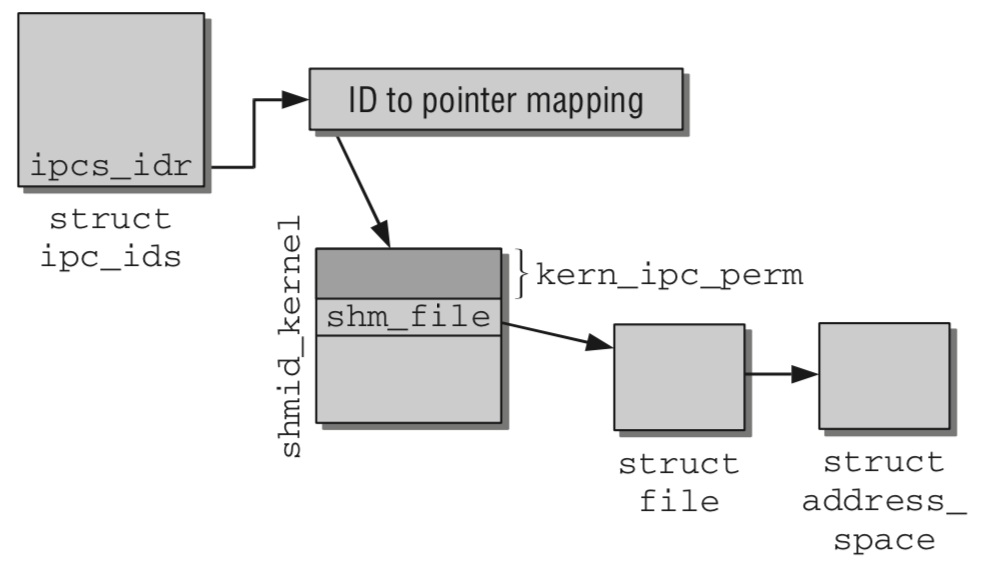
核心函数
- 创建共享内存段 (
shmget):
shmget 系统调用创建新的共享内存段,分配对应的物理内存,并初始化相关的结构体信息。
- 附加共享内存段 (
shmat):
shmat 系统调用将共享内存段映射到调用进程的地址空间中,更新附加计数和时间戳。
- 分离共享内存段 (
shmdt):
shmdt 系统调用将共享内存段从调用进程的地址空间中解除映射,更新附加计数和时间戳。
- 控制共享内存段 (
shmctl):
shmctl 系统调用用于控制共享内存段,例如设置权限、删除共享内存段等。
主要结构体
结构体 shmid_kernel
共享内存段在内核中使用 shmid_kernel 结构体表示,该结构体定义如下:
 1
 2
 3
 4
 5
 6
 7
 8
 9
10
11
12
13
14
|
struct shmid_kernel {
	struct kern_ipc_perm shm_perm; /* 权限结构体 */
	struct file *shm_file;         /* 对应的文件 */
	size_t shm_segsz;              /* 段大小 */
	struct user_struct *shm_creator; /* 创建者 */
	struct user_struct *shm_last_attach; /* 最后一次附加的用户 */
	struct work_struct shm_rmid_work; /* 删除工作 */
	int shm_nattch;               /* 当前附加的进程数 */
	time64_t shm_atim;            /* 最后附加时间 */
	time64_t shm_dtim;            /* 最后分离时间 */
	time64_t shm_ctim;            /* 最后改变时间 */
	pid_t shm_cprid;              /* 创建者 PID */
	pid_t shm_lprid;              /* 最后附加或分离的 PID */
};
|
详细分析
实际源码中的函数名需要加上ksys_前缀,原因大概是为了区分内核内部调用和用户空间接口,ksys_shmget函数封装的一层后变成了shmget函数。
使用 ksys_ 前缀可以清楚地将内核内部函数与用户空间系统调用接口区分开来。用户空间程序调用的是无前缀的系统调用(例如 sys_open),而内核内部模块或函数调用的是 ksys_open。
1
2
3
4
|
SYSCALL_DEFINE3(shmget, key_t, key, size_t, size, int, shmflg)
{
	return ksys_shmget(key, size, shmflg);
}
|
1、共享内存的创建
创建共享内存段的主要函数是 shmget。
实际调用的函数是ipcget()。共享内存、信号量、消息队列三种对象创建的时候都会调用这个函数。
 1
 2
 3
 4
 5
 6
 7
 8
 9
10
11
12
13
14
15
16
17
18
|
long ksys_shmget(key_t key, size_t size, int shmflg)
{
	struct ipc_namespace *ns;
	static const struct ipc_ops shm_ops = {
		.getnew = newseg,
		.associate = security_shm_associate,
		.more_checks = shm_more_checks,
	};
	struct ipc_params shm_params;

	ns = current->nsproxy->ipc_ns;

	shm_params.key = key;
	shm_params.flg = shmflg;
	shm_params.u.size = size;

	return ipcget(ns, &shm_ids(ns), &shm_ops, &shm_params);
}
|
参数:
key: 类型 key_t 是个整形数,通过这个key可以创建或者打开一块共享内存,该参数的值一定要大于0
size: 创建共享内存的时候,指定共享内存的大小,如果是打开一块存在的共享内存,size 是没有意义的
shmflg:创建共享内存的时候指定的属性
- IPC_CREAT: 创建新的共享内存,如果创建共享内存,需要指定对共享内存的操作权限,比如:IPC_CREAT | 0664
- IPC_EXCL: 检测共享内存是否已经存在了,必须和 IPC_CREAT 一起使用
返回值:共享内存创建或者打开成功返回标识共享内存的唯一的 ID,失败返回 - 1.
我们回头来看看shmget()究竟干了啥,首先看一下ipcget()
1
2
3
4
5
6
7
8
|
int ipcget(struct ipc_namespace *ns, struct ipc_ids *ids,
            const struct ipc_ops *ops, struct ipc_params *params)
{
    if (params->key == IPC_PRIVATE)
        return ipcget_new(ns, ids, ops, params);
    else
        return ipcget_public(ns, ids, ops, params);
}
|
如果传进来的参数是IPC_PRIVATE(这个宏的值是0)的话,无论是什么mode,都会创建一块新的共享内存。如果非0,则会去已有的共享内存中找有没有这个key的,有就返回,没有就新建。
2、共享内存的关联
关联共享内存段的主要函数是 shmat,它的逻辑全在do_shmat()中,所以我们直接看这个函数。
首先检查shmaddr的合法性并进行对齐,即调整为shmlba的整数倍。如果传入addr是0,前面检查部分只会加上一个MAP_SHARED标志,因为后面的mmap会自动为其分配地址。然后从那一段两行的注释开始,函数通过shmid尝试获取共享内存对象,并进行权限检查。然后修改shp中的一些数据,比如连接进程数加一。然后是通过alloc_file_clone()创建真正的要做mmap的file。在mmap之前还要对地址空间进行检查,检查是否和别的地址重叠,是否够用。实际的映射工作就在do_mmap()函数中做了。
  1
  2
  3
  4
  5
  6
  7
  8
  9
 10
 11
 12
 13
 14
 15
 16
 17
 18
 19
 20
 21
 22
 23
 24
 25
 26
 27
 28
 29
 30
 31
 32
 33
 34
 35
 36
 37
 38
 39
 40
 41
 42
 43
 44
 45
 46
 47
 48
 49
 50
 51
 52
 53
 54
 55
 56
 57
 58
 59
 60
 61
 62
 63
 64
 65
 66
 67
 68
 69
 70
 71
 72
 73
 74
 75
 76
 77
 78
 79
 80
 81
 82
 83
 84
 85
 86
 87
 88
 89
 90
 91
 92
 93
 94
 95
 96
 97
 98
 99
100
101
102
103
104
105
106
107
108
109
110
111
112
113
114
115
116
117
118
119
120
121
122
123
124
125
126
127
128
129
130
131
132
133
134
135
136
137
138
139
140
141
142
143
144
145
146
147
148
149
150
151
152
153
154
155
156
157
158
159
160
161
162
163
164
165
166
167
168
169
170
171
172
173
|
long do_shmat(int shmid, char __user *shmaddr, int shmflg,
	      ulong *raddr, unsigned long shmlba)
{
	struct shmid_kernel *shp;
	unsigned long addr = (unsigned long)shmaddr;
	unsigned long size;
	struct file *file, *base;
	int    err;
	unsigned long flags = MAP_SHARED;
	unsigned long prot;
	int acc_mode;
	struct ipc_namespace *ns;
	struct shm_file_data *sfd;
	int f_flags;
	unsigned long populate = 0;

	err = -EINVAL;
	if (shmid < 0)
		goto out;

	if (addr) {
		if (addr & (shmlba - 1)) {
			if (shmflg & SHM_RND) {
				addr &= ~(shmlba - 1);  /* round down */

				/*
				 * Ensure that the round-down is non-nil
				 * when remapping. This can happen for
				 * cases when addr < shmlba.
				 */
				if (!addr && (shmflg & SHM_REMAP))
					goto out;
			} else
#ifndef __ARCH_FORCE_SHMLBA
				if (addr & ~PAGE_MASK)
#endif
					goto out;
		}

		flags |= MAP_FIXED;
	} else if ((shmflg & SHM_REMAP))
		goto out;

	if (shmflg & SHM_RDONLY) {
		prot = PROT_READ;
		acc_mode = S_IRUGO;
		f_flags = O_RDONLY;
	} else {
		prot = PROT_READ | PROT_WRITE;
		acc_mode = S_IRUGO | S_IWUGO;
		f_flags = O_RDWR;
	}
	if (shmflg & SHM_EXEC) {
		prot |= PROT_EXEC;
		acc_mode |= S_IXUGO;
	}

	/*
	 * We cannot rely on the fs check since SYSV IPC does have an
	 * additional creator id...
	 */
	ns = current->nsproxy->ipc_ns;
	rcu_read_lock();
	shp = shm_obtain_object_check(ns, shmid);
	if (IS_ERR(shp)) {
		err = PTR_ERR(shp);
		goto out_unlock;
	}

	err = -EACCES;
	if (ipcperms(ns, &shp->shm_perm, acc_mode))
		goto out_unlock;

	err = security_shm_shmat(&shp->shm_perm, shmaddr, shmflg);
	if (err)
		goto out_unlock;

	ipc_lock_object(&shp->shm_perm);

	/* check if shm_destroy() is tearing down shp */
	if (!ipc_valid_object(&shp->shm_perm)) {
		ipc_unlock_object(&shp->shm_perm);
		err = -EIDRM;
		goto out_unlock;
	}

	/*
	 * We need to take a reference to the real shm file to prevent the
	 * pointer from becoming stale in cases where the lifetime of the outer
	 * file extends beyond that of the shm segment.  It's not usually
	 * possible, but it can happen during remap_file_pages() emulation as
	 * that unmaps the memory, then does ->mmap() via file reference only.
	 * We'll deny the ->mmap() if the shm segment was since removed, but to
	 * detect shm ID reuse we need to compare the file pointers.
	 */
	base = get_file(shp->shm_file);
	shp->shm_nattch++;
	size = i_size_read(file_inode(base));
	ipc_unlock_object(&shp->shm_perm);
	rcu_read_unlock();

	err = -ENOMEM;
	sfd = kzalloc(sizeof(*sfd), GFP_KERNEL);
	if (!sfd) {
		fput(base);
		goto out_nattch;
	}

	file = alloc_file_clone(base, f_flags,
			  is_file_hugepages(base) ?
				&shm_file_operations_huge :
				&shm_file_operations);
	err = PTR_ERR(file);
	if (IS_ERR(file)) {
		kfree(sfd);
		fput(base);
		goto out_nattch;
	}

	sfd->id = shp->shm_perm.id;
	sfd->ns = get_ipc_ns(ns);
	sfd->file = base;
	sfd->vm_ops = NULL;
	file->private_data = sfd;

	err = security_mmap_file(file, prot, flags);
	if (err)
		goto out_fput;

	if (mmap_write_lock_killable(current->mm)) {
		err = -EINTR;
		goto out_fput;
	}

	if (addr && !(shmflg & SHM_REMAP)) {
		err = -EINVAL;
		if (addr + size < addr)
			goto invalid;

		if (find_vma_intersection(current->mm, addr, addr + size))
			goto invalid;
	}

	addr = do_mmap(file, addr, size, prot, flags, 0, 0, &populate, NULL);
	*raddr = addr;
	err = 0;
	if (IS_ERR_VALUE(addr))
		err = (long)addr;
invalid:
	mmap_write_unlock(current->mm);
	if (populate)
		mm_populate(addr, populate);

out_fput:
	fput(file);

out_nattch:
	down_write(&shm_ids(ns).rwsem);
	shp = shm_lock(ns, shmid);
	shp->shm_nattch--;

	if (shm_may_destroy(shp))
		shm_destroy(ns, shp);
	else
		shm_unlock(shp);
	up_write(&shm_ids(ns).rwsem);
	return err;

out_unlock:
	rcu_read_unlock();
out:
	return err;
}
|
3、共享内存的解除关联
当进程不需要再操作共享内存,可以让进程和共享内存解除关联,另外如果没有执行该操作,进程退出之后,结束的进程和共享内存的关联也就自动解除了。
这个函数先找到传入的shmaddr对应的虚拟内存数据结构vma,检查它的地址是不是正确的,然后调用do_vma_munmap()函数断开对共享内存的连接。注意此操作并不会销毁共享内存,即使没有进程连接到它也不会,只有手动调用shmctl(id, IPC_RMID, NULL)才能销毁。
  1
  2
  3
  4
  5
  6
  7
  8
  9
 10
 11
 12
 13
 14
 15
 16
 17
 18
 19
 20
 21
 22
 23
 24
 25
 26
 27
 28
 29
 30
 31
 32
 33
 34
 35
 36
 37
 38
 39
 40
 41
 42
 43
 44
 45
 46
 47
 48
 49
 50
 51
 52
 53
 54
 55
 56
 57
 58
 59
 60
 61
 62
 63
 64
 65
 66
 67
 68
 69
 70
 71
 72
 73
 74
 75
 76
 77
 78
 79
 80
 81
 82
 83
 84
 85
 86
 87
 88
 89
 90
 91
 92
 93
 94
 95
 96
 97
 98
 99
100
101
102
103
104
105
106
107
108
109
110
111
112
113
114
115
116
117
118
119
120
121
122
|
COMPAT_SYSCALL_DEFINE3(shmat, int, shmid, compat_uptr_t, shmaddr, int, shmflg)
{
	unsigned long ret;
	long err;

	err = do_shmat(shmid, compat_ptr(shmaddr), shmflg, &ret, COMPAT_SHMLBA);
	if (err)
		return err;
	force_successful_syscall_return();
	return (long)ret;
}
#endif

/*
 * detach and kill segment if marked destroyed.
 * The work is done in shm_close.
 */
long ksys_shmdt(char __user *shmaddr)
{
	struct mm_struct *mm = current->mm;
	struct vm_area_struct *vma;
	unsigned long addr = (unsigned long)shmaddr;
	int retval = -EINVAL;
#ifdef CONFIG_MMU
	loff_t size = 0;
	struct file *file;
	VMA_ITERATOR(vmi, mm, addr);
#endif

	if (addr & ~PAGE_MASK)
		return retval;

	if (mmap_write_lock_killable(mm))
		return -EINTR;

	/*
	 * This function tries to be smart and unmap shm segments that
	 * were modified by partial mlock or munmap calls:
	 * - It first determines the size of the shm segment that should be
	 *   unmapped: It searches for a vma that is backed by shm and that
	 *   started at address shmaddr. It records it's size and then unmaps
	 *   it.
	 * - Then it unmaps all shm vmas that started at shmaddr and that
	 *   are within the initially determined size and that are from the
	 *   same shm segment from which we determined the size.
	 * Errors from do_munmap are ignored: the function only fails if
	 * it's called with invalid parameters or if it's called to unmap
	 * a part of a vma. Both calls in this function are for full vmas,
	 * the parameters are directly copied from the vma itself and always
	 * valid - therefore do_munmap cannot fail. (famous last words?)
	 */
	/*
	 * If it had been mremap()'d, the starting address would not
	 * match the usual checks anyway. So assume all vma's are
	 * above the starting address given.
	 */

#ifdef CONFIG_MMU
	for_each_vma(vmi, vma) {
		/*
		 * Check if the starting address would match, i.e. it's
		 * a fragment created by mprotect() and/or munmap(), or it
		 * otherwise it starts at this address with no hassles.
		 */
		if ((vma->vm_ops == &shm_vm_ops) &&
			(vma->vm_start - addr)/PAGE_SIZE == vma->vm_pgoff) {

			/*
			 * Record the file of the shm segment being
			 * unmapped.  With mremap(), someone could place
			 * page from another segment but with equal offsets
			 * in the range we are unmapping.
			 */
			file = vma->vm_file;
			size = i_size_read(file_inode(vma->vm_file));
			do_vma_munmap(&vmi, vma, vma->vm_start, vma->vm_end,
				      NULL, false);
			/*
			 * We discovered the size of the shm segment, so
			 * break out of here and fall through to the next
			 * loop that uses the size information to stop
			 * searching for matching vma's.
			 */
			retval = 0;
			vma = vma_next(&vmi);
			break;
		}
	}

	/*
	 * We need look no further than the maximum address a fragment
	 * could possibly have landed at. Also cast things to loff_t to
	 * prevent overflows and make comparisons vs. equal-width types.
	 */
	size = PAGE_ALIGN(size);
	while (vma && (loff_t)(vma->vm_end - addr) <= size) {
		/* finding a matching vma now does not alter retval */
		if ((vma->vm_ops == &shm_vm_ops) &&
		    ((vma->vm_start - addr)/PAGE_SIZE == vma->vm_pgoff) &&
		    (vma->vm_file == file)) {
			do_vma_munmap(&vmi, vma, vma->vm_start, vma->vm_end,
				      NULL, false);
		}

		vma = vma_next(&vmi);
	}

#else	/* CONFIG_MMU */
	vma = vma_lookup(mm, addr);
	/* under NOMMU conditions, the exact address to be destroyed must be
	 * given
	 */
	if (vma && vma->vm_start == addr && vma->vm_ops == &shm_vm_ops) {
		do_munmap(mm, vma->vm_start, vma->vm_end - vma->vm_start, NULL);
		retval = 0;
	}

#endif

	mmap_write_unlock(mm);
	return retval;
}
|
参数:shmat () 函数的返回值,共享内存的起始地址
返回值:关联解除成功返回 0,失败返回 - 1
4、删除共享内存
shmctl () 函数是一个多功能函数,可以设置、获取共享内存的状态也可以将共享内存标记为删除状态。当共享内存被标记为删除状态之后,并不会马上被删除,直到所有的进程全部和共享内存解除关联,共享内存才会被删除。因为通过 shmctl () 函数只是能够标记删除共享内存,所以在程序中多次调用该操作是没有关系的。
 1
 2
 3
 4
 5
 6
 7
 8
 9
10
11
12
13
14
15
16
|
// 共享内存控制函数
int shmctl(int shmid, int cmd, struct shmid_ds *buf);

// 参数 struct shmid_ds 结构体原型
struct shmid_ds {
    struct ipc_perm shm_perm;    /* Ownership and permissions */
    size_t          shm_segsz;   /* Size of segment (bytes) */
    time_t          shm_atime;   /* Last attach time */
    time_t          shm_dtime;   /* Last detach time */
    time_t          shm_ctime;   /* Last change time */
    pid_t           shm_cpid;    /* PID of creator */
    pid_t           shm_lpid;    /* PID of last shmat(2)/shmdt(2) */
    // 引用计数, 多少个进程和共享内存进行了关联
    shmatt_t        shm_nattch;  /* 记录了有多少个进程和当前共享内存进行了管联 */
    ...
};
|
参数:
shmid: 要操作的共享内存的 ID, 是 shmget () 函数的返回值
cmd: 要做的操作,比如
IPC_STAT: 得到当前共享内存的状态
IPC_SET: 设置共享内存的状态
IPC_RMID: 标记共享内存要被删除了
buf:
cmd==IPC_STAT, 作为传出参数,会得到共享内存的相关属性信息
cmd==IPC_SET, 作为传入参,将用户的自定义属性设置到共享内存中
cmd==IPC_RMID, buf 就没意义了,这时候 buf 指定为 NULL 即可
返回值:函数调用成功返回值大于等于 0,调用失败返回 - 1
现有安全保护机制
1、权限控制
ipc_perm 结构包含了用户 ID、组 ID 以及权限位,可以用来控制谁可以访问、修改或删除共享内存段。
2、安全模块(LSM)框架
Linux 内核中的安全模块(LSM)框架提供了钩子(hook),可以在各种系统调用和内核事件中插入自定义的安全检查。(在内核源码树/security/security.c中)例如,shmat 系统调用中的安全检查:
1
2
3
4
|
int security_shmat(struct shmid_kernel *shp, char __user *shmaddr, int shmflg)
{
    return call_int_hook(shmat, 0, shp, shmaddr, shmflg);
}
|
3、命名空间隔离
使用命名空间(Namespace)来隔离 IPC 资源。每个 IPC 命名空间都有自己的共享内存段、消息队列和信号量集合。这可以防止不同容器或进程组之间的 IPC 资源冲突或未授权访问
4、地址空间随机化(ASLR)
5、内存保护机制
使用内存保护机制,如不可执行(non-executable,NX)位和只读(read-only)保护,来防止代码注入和数据篡改。
其它IPC相关源码
1. 管道(Pipe)和命名管道(Named Pipe)
管道和命名管道的实现主要在fs/pipe.c文件中。
功能:
- 管道提供单向的数据流,适用于父子进程之间的通信。
- 命名管道(FIFO)类似于管道,但它存在于文件系统中,可以用于任意进程间的通信。
实现分析:
- 使用循环缓冲区实现数据的读写。
- 提供了创建、读、写、关闭等系统调用接口。
相关文件:
fs/pipe.cinclude/linux/pipe_fs_i.h
2. 套接字(Socket)
套接字是网络通信和进程间通信的重要机制,其实现涉及多个文件,分布在net目录下。
功能:
- 套接字用于通过网络进行进程间通信,支持多种协议(如TCP、UDP)。
- 也可以用于本地进程间通信(UNIX域套接字)。
实现分析:
- 套接字的核心实现包括协议族(如AF_INET、AF_UNIX)的具体实现。
- 提供创建、绑定、监听、接受、发送、关闭等系统调用接口。
相关文件:
net/socket.cnet/unix/af_unix.cinclude/net/sock.h
3. 信号(Signal)
信号是用于异步通知进程的一种机制。
功能:
实现分析:
- 内核维护信号队列,当进程处于适当状态时,处理挂起的信号。
- 提供信号的发送、处理、阻塞、忽略等功能。
相关文件:
kernel/signal.cinclude/linux/signal.h
IPC安全增强方法
要对进程间通信(IPC)机制进行安全增强,需要考虑多方面的安全威胁,并采取相应的安全措施。这些措施可以从以下几个方面来实现:
- 访问控制和权限管理
- 使用权限控制:对共享内存、消息队列、信号量等 IPC 资源进行严格的权限控制,确保只有授权的进程可以访问。
- 用户和组权限:通过设置 IPC 对象的所有者、所属组和访问权限(读、写、执行),控制哪些用户和组可以访问这些 IPC 资源。
- 数据加密
- 加密传输的数据:对于在 IPC 通道中传输的数据,使用加密技术(如 AES、RSA 等)进行加密,防止数据在传输过程中被窃取或篡改。
- 加密共享内存:在写入共享内存的数据之前对其进行加密,并在读取时解密。
- 数据完整性
- 数据校验:使用哈希函数(如 SHA-256)或消息认证码(MAC)来校验数据的完整性,确保数据在传输过程中未被篡改。
- 数字签名:对重要数据进行数字签名,验证数据的来源和完整性。
- 防止资源滥用
- 限制资源使用:设置合理的资源限制(如共享内存大小、消息队列长度、信号量数量),防止进程滥用资源导致系统崩溃或性能下降。
- 超时机制:对 IPC 操作设置超时,避免进程因等待资源而无限阻塞。
- 审计和日志记录
- 记录操作日志:对所有 IPC 操作进行日志记录,记录操作的时间、类型、发起进程和目标进程等信息,以便在发生安全事件时进行追踪和分析。
- 定期审计:定期检查和分析日志,发现异常或可疑的行为,及时采取措施。
- 隔离和沙箱
- 进程隔离:使用容器(如 Docker)或虚拟化技术,将进程隔离在不同的沙箱中,限制其访问系统资源的能力。
- 安全上下文:在安全上下文中运行进程,限制其权限和资源访问能力,防止其对系统造成破坏。
参考资料:
http://39.105.211.21:8080/132K3/kernel/src/branch/OLK-6.6-dev-k1/ipc
linux/ipc at v6.6 · torvalds/linux (github.com)
【Linux编程】进程间通信(IPC) (songlee24.github.io)
理解 Linux Kernel (11) - 进程间通信 (ffutop.com)
阅读 Linux 内核源码——共享内存 - SegmentFault
Linux - 进程间通信(IPC)共享内存(cnblogs.com)
信号量(cnblogs.com)
Linux - 进程间通信(IPC)消息队列